← History Diaries
Référence · fancy words included
Gigi’s Glossary of Fancy Words You Can Use to Sound Smart 🧠
complex or specific words, explained by me Gigi
Right, so throughout this whole site I’ve been flinging fancy dance words at you like confetti. Here they all are in one place, defined properly, so you can casually drop them into conversation and watch grown-ups look impressed. You’re welcome (again). 💅
PART ONE: WORDS YOUR TEACHER WILL YELL AT YOU 🗣️
- Plié (plee-AY)
- Bending your knees while keeping your back annoyingly straight and dignified. Roughly ninety per cent of every ballet class. Blame the French king.
- Tendu (tahn-DOO)
- Stretching one pointed foot along the floor and back. Looks easy. Is not. French for “stretched.”
- Jeté (zhuh-TAY)
- A jump where you throw one leg out into the air. “Jeté” literally means “thrown,” which is also roughly how graceful I look doing it.
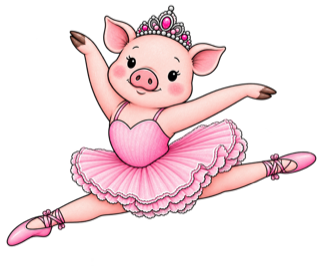
- Grand jeté (grahn zhuh-TAY)
- A big flying leap where you do the splits in mid-air. The showing-off one. Absolutely iconic and absolutely terrifying.
- Pirouette (peer-oo-ET)
- A spin on one leg. I can do about three before I look like a washing machine. Odile in Swan Lake does thirty-two. Life is not fair.
- Fouetté (fweh-TAY)
- The whip-turn used for those famous thirty-two spins in Swan Lake. From the French for “whipped” — which is also how your standing leg feels afterwards.
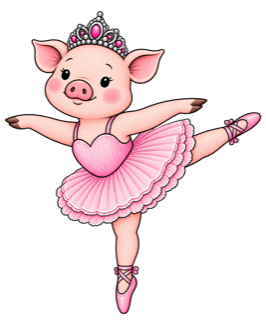
- Arabesque (ah-ruh-BESK)
- Standing on one leg with the other stretched out behind you in one long, beautiful line. Peak ballerina. Peak wobble risk.
- Port de bras (por duh BRAH)
- Literally “carriage of the arms” — the posh way of saying “how you move your arms so they don’t look like two wet noodles.” (See: my entire personality in class.)
- Barre (bar)
- The wooden rail you cling to for dear life for the first half of every single class. French for “bar.” Not that kind of bar.
- Turnout
- Rotating your legs outwards from the hips so your feet point sideways. Deeply, deeply unnatural. We do it anyway, for hours, on purpose. Your ability to turn out basically defines whether you are “ballerina material”.
- En pointe (on PWANT)
- Dancing on the very tips of your toes in special hard-tipped shoes. Blame Marie Taglioni. (Lovingly. Mostly.)
- Sous-sus (soo-SUE)
- Springing up with both feet glued together in a super-tight fifth — so tight that from the front they look like ONE single leg. Literally “under-over”. Tiny step, instant ballerina posture.
- Pas de deux (pah duh DUH)
- Literally "a step (a.k.a dance) for two" — usually the big romantic duet where someone gets lifted dramatically. Plot twist: it's not one dance, it's a whole five-part mini-show. Entrance (they arrive, gorgeous) → adagio (the slow romantic partnering everyone films) → his solo → her solo → coda (the fast fireworks bit where the fouettés live). People point at the coda and go "the pas de deux!" — babes, the pas de deux is the WHOLE thing. You now know more than half the audience.
PART TWO: WORDS TO DROP SO PEOPLE THINK YOU’RE VERY CULTURED 💅
- Corps de ballet (kor duh ba-LAY)
- The group of dancers who all move together as one gorgeous synchronised flock. A starter’s whole existence. “Corps” means “body.”
- Prima ballerina
- The top female dancer in a company. The main character. The dream. The one who gets the thirty-two fouettés.
- Choreographer
- The person who invents the steps and puts the whole dance together. The author of the dance. The boss.
- Tutu
- The ballerina skirt. Two flavours: the long, floaty Romantic tutu (Giselle vibes 👻) and the short, stiff, sticks-straight-out pancake tutu (Swan Lake vibes 🦢).
- Ballet de cour (ba-LAY duh KOOR)
- “Court ballet” — the very first ballets, danced by kings and nobles at the French court. Where the whole thing began. Fun fact, you can still learn something similar, “dance baroque” notably at the Paris Opera school.
- Romantic ballet
- The 1800s era of moonlight, ghosts, sylphs, and tragic doomed love. Pointe shoes and big feelings. Nothing to do with Valentine’s Day.
- Neoclassical
- Balanchine’s style: proper classical technique, but modern and stripped-back, often with no story and no fancy sets, but a jazzy vibe. Literally “new classical.”
- Modern dance
- The barefoot rebellion kicked off by Isadora and Martha — dance built out of raw emotion and a strong desire to break every ballet rule going.
- Contemporary dance
- The anything-goes dance of today, mixing ballet, modern, and whatever else works. If you’re not totally sure what to call something, it’s probably this.
- Contraction and release
- Martha Graham’s signature technique, built entirely out of breathing in and out. The beating heart of modern dance.
- Chance operations
- Merce Cunningham’s method of letting dice, coins, or an ancient book decide the steps. Pure chaos, but make it art.
- Tanztheater (TANTS-tay-ah-ter)
- German for “dance-theatre” — Pina Bausch’s mash-up of dancing, acting, and raw feeling. Often involves dirt or flowers on the stage.
- Wilis (VEE-lees)
- The squad of vengeful ghost-girls in Giselle who force men to dance until they drop dead. Terrifying. Iconic. My role models, honestly.
- Drambalet
- Soviet “dance-drama,” where the story and the real human emotion matter every bit as much as the fancy technique. See: The Fountain of Bakhchisarai.